Product Title
Product Content
Product Content
Product Content
Feature
Feature
Feature
Feature
Small print
Small print
Small print
Addons
Explore what’s possible with treatment
I want to...
Lose weight for good
Managing your weight isn't just about willpower; it’s about biology. For many, the body’s internal signals for hunger and fullness are out of sync. Medical treatments like these act as a "reset button," helping you feel full sooner and stay satisfied for longer. In major clinical trials like STEP 1 and SURMOUNT-1, patients lost between 15% and 21% of their total body weight. This isn't a quick fix, but a long-term tool to help you reach a healthy weight and stay there. The honest truth too is that many patients may need to stay on medication for the long term.
Reference: Wilding, J. P. H., et al. (2021). "Once-Weekly Semaglutide in Adults with Overweight or Obesity." The New England Journal of Medicine.
Improve my fitness
When you carry less weight and your heart works more efficiently, exercise stops feeling like a chore and starts feeling good. Data from the STEP-HFpEF trials showed that patients could walk further and for longer after starting treatment. By improving your "VO2 max"—which is basically how well your body uses oxygen—the medication gives you the physical "engine" you need to get back into the activities and hobbies you love.
Reference: Kosiborod, M. N., et al. (2023). "Semaglutide in Patients with Heart Failure with Preserved Ejection Fraction and Obesity." The New England Journal of Medicine.
Protect my heart
One of the most important things we look at as doctors is your heart health. These injections do more than just help you slim down—they actively protect your cardiovascular system. The SELECT Trial showed that for people with heart concerns, this treatment reduced the risk of serious events like heart attacks and strokes by 20%. By reducing inflammation and taking the pressure off your heart, it helps you live a longer, healthier life.
Reference: Lincoff, A. M., et al. (2023). "Semaglutide and Cardiovascular Outcomes in Obesity without Diabetes." The New England Journal of Medicine.
Help the food cravings
Many people struggle with "food noise"—those constant, intrusive thoughts about what to eat next. One of the most life-changing benefits our patients report is a newfound sense of mental peace. A major 2025 BMJ Mental Health study confirmed that these treatments are safe for your mood. By "switching off" the constant cravings in the brain, the medication helps you feel back in the driver’s seat, leading to a much calmer, happier, and more confident relationship with food.
Reference: McIntyre, R. S., et al. (2025). "GLP-1 Receptor Agonists and Mental Health Outcomes: A Real-World Evidence Study." BMJ Mental Health.
Help my aching joints
Carrying extra weight puts a massive amount of pressure on your knees, hips, and back. The STEP 9 trial specifically looked at patients with joint pain and found that they reported a 40% reduction in pain. While losing weight helps take the physical load off, the medication also helps reduce the general "puffiness" and inflammation in the joints, making it much easier and more comfortable to move around and stay active.
Reference: Arden, N. K., et al. (2025). "Semaglutide for Knee Osteoarthritis in Patients with Obesity." Annals of the Rheumatic Diseases.
Lower my blood pressure
High blood pressure is often called a "silent" problem, putting extra strain on your heart and arteries every day. We often see our patients' blood pressure readings improve significantly once they start treatment. According to research in the American Journal of Hypertension (2025), the medication helps your body get rid of excess salt and helps your blood vessels relax. This can lead to a healthier heart and, in some cases, may even reduce your need for traditional blood pressure tablets.
Reference: Ferdinand, K. C., et al. (2025). "The Role of GLP-1 Receptor Agonists in Hypertension Management." American Journal of Hypertension.
Improve my metabolism and hormones
Conditions like PCOS (Polycystic Ovary Syndrome) and insulin resistance can make you feel like you’re fighting a losing battle with your own body. The COSMOS Study found that these injections are much more effective than older treatments like Metformin for balancing hormones. By helping your body process sugar properly again, the treatment can help clear the "metabolic fog," regulate your cycles, and make weight loss feel achievable at last.
Reference: Epic Research. (2025). "GLP-1s vs Metformin for Metabolic Health in PCOS." Journal of Clinical Endocrinology & Metabolism.
Avoid Type 2 Diabetes
If you have been told you have "pre-diabetes," it’s a vital time to take action. This medication is one of the most powerful ways to stop Type 2 Diabetes before it starts. The SURPASS and STEP trials showed that the risk of moving from pre-diabetes to full diabetes was cut by over 80%. For many, blood sugar levels return to a completely normal, healthy range, protecting your future health and avoiding the complications that come with diabetes.
Reference: Holst, J. J., et al. (2024). "Prevention of Type 2 Diabetes with GLP-1 Receptor Agonists." The Lancet Diabetes & Endocrinology.
Help my fatty liver
Fatty liver disease (MASH) is a very common condition that often has no symptoms but can cause long-term damage. Recent breakthroughs in the ESSENCE and SYNERGY-NASH trials have been incredibly positive. They showed that up to 70% of people saw the fat and inflammation in their liver clear up significantly. This treatment is now considered a major step forward in repairing liver health and preventing future scarring.
Reference: Loomba, R., et al. (2024). "Tirzepatide for the Treatment of Non-alcoholic Steatohepatitis." Nature Medicine.
Sleep better at night
Sleep apnoea—where you stop breathing momentarily during the night—can leave you feeling exhausted every morning. The SURMOUNT-OSA trial found that this treatment reduced these breathing interruptions by about 30 times every hour. Patients often find they sleep much more deeply, have more energy during the day, and many even find they no longer need to use bulky breathing masks (CPAP machines) at night.
Reference: Malhotra, A., et al. (2024). "Tirzepatide for the Treatment of Obstructive Sleep Apnea." The New England Journal of Medicine.

How does Mounjaro work?
Mounjaro (tirzepatide) is a once-weekly injection that mimics the action of two natural hormones, GLP-1 and GIP, which work together to regulate appetite, reduce food cravings, and balance blood sugar levels.
By enhancing your body’s fullness signals and slowing digestion, Mounjaro helps you eat less without feeling deprived. The result is steady, sustainable weight loss supported by better blood sugar control and reduced hunger throughout the day.

Is Mounjaro right for me?
As a CQC-regulated service, we follow strict UK clinical guidelines. Mounjaro is typically suitable for patient's with a:
- A BMI of 30 or above.
- A BMI of 27 or above with weight-related health issues (like high blood pressure or PCOS).
We do not use automatic prescribing. If Mounjaro isn’t the right fit, our doctors will explain why and discuss alternative paths to reach your goals safely.

Some honest truths
Choosing a medical treatment is a significant decision that requires a clear understanding of both the benefits and the realities of the journey. Here is an evidence-based look at what to expect.

The messageGP approach
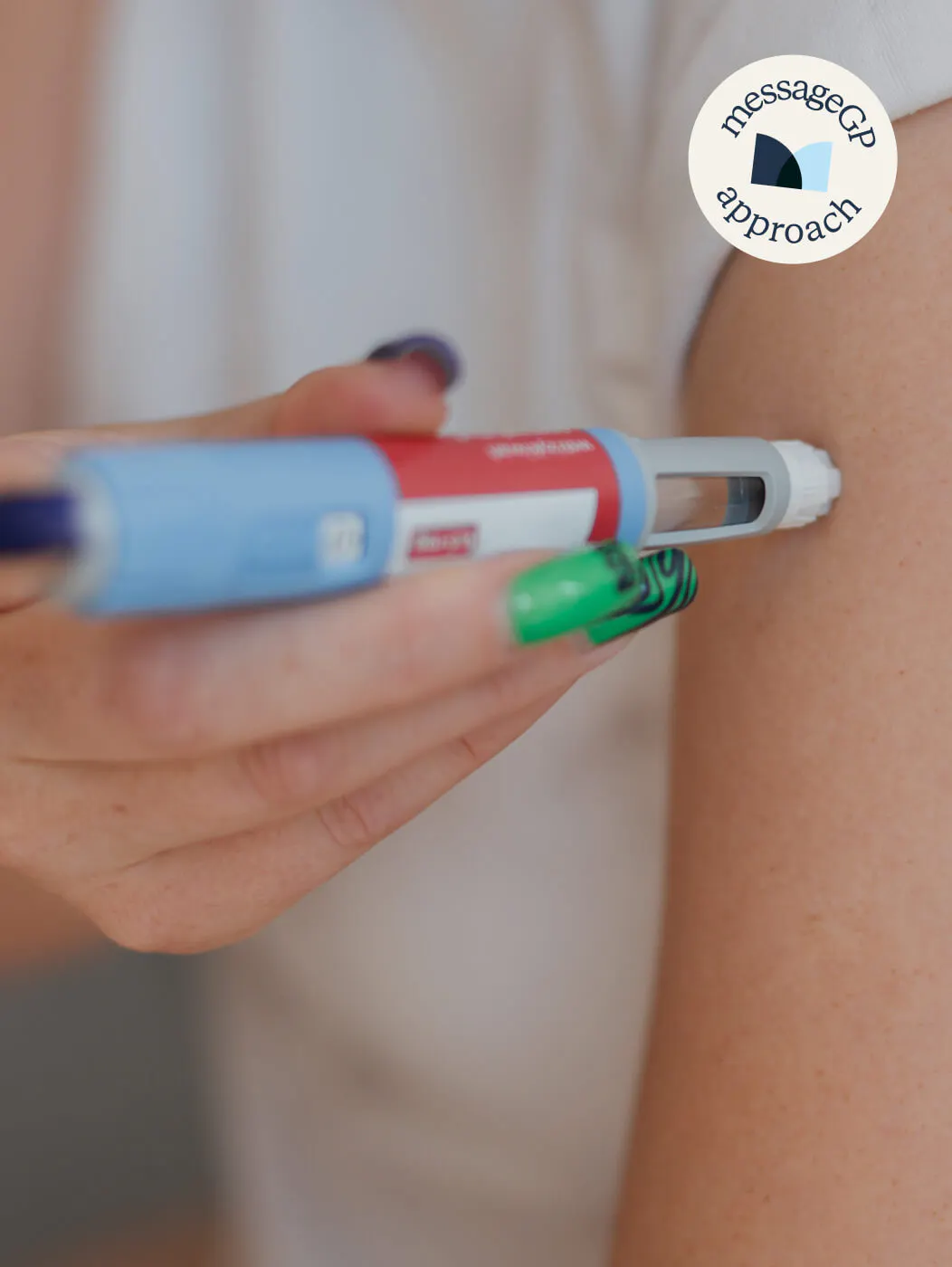
Mounjaro is a significant medication, and we believe it is safest when managed alongside a doctor who knows your medical history. Our priority is ensuring your weight loss journey is steady, sustainable, and medically sound.

Dosage and possible side effects
Be Informed: Mounjaro is given once weekly, with the dose gradually increased to help your body adjust. Your GP will review your progress every four weeks to decide whether to continue or adjust your dose.
Common side effects are typically mild and short-term and can include nausea, constipation, or diarrhoea. These tend to improve as your body adapts.
Your weight loss journey

Check eligibility
Complete an online form. A doctor personally reviews every case. We’ll get back to you through WhatsApp, email or phone call.

GP Consultation
A detailed talk about your history, the benefits, and how to use your treatment.
First injection, together:
Nervous? We can guide you through your first dose via video call to build your confidence.

Monthly catch-ups
We check in every 4 weeks to monitor progress and fine-tune your dose.

Long-term support
Once you reach your goals, we focus on maintenance to help you keep the results for life.
Meet the team

Dr. Arpit Srivastava
General Practitioner · Clinical Lead · GMC number 7082769
Arpit is a GMC-registered GP with a specialist interest in skin conditions, including eczema - a field he approaches with both clinical expertise and lived experience as a member of the International Society of Atopic Dermatitis. Alongside seeing patients, he sits on a NICE committee helping shape national healthcare guidelines, and has presented at conferences on AI and HealthTech. At messageGP, Arpit leads clinical care and is the driving force behind bringing safe, trusted GP consultations to patients wherever they are.

Eloise Garbutt
Registered Dietitian · HCPC
Eloise is a HCPC-regulated Registered Dietitian with over five years' experience across the NHS and leading London private hospitals. She specialises in sustainable weight management alongside gastroenterology, diabetes and women's health — always creating a non-judgemental space for patients.
Got Questions?
Got a question? We’ve got the answers. Explore our full FAQs page or send us a WhatsApp. We’re happy to answer any queries you might have.
Is Mounjaro safe?
Mounjaro is a prescription-only medicine studied extensively in clinical trials. While effective, it isn't for everyone. This is why we perform a full medical assessment and provide ongoing GP monitoring to manage side effects and ensure your safety.
How much weight can I expect to lose?
Results vary based on your starting weight, medical history, and adherence to treatment. We focus on safe, sustainable weight loss rather than extreme, rapid results.
How long will I need to take it?
There is no fixed length. We review your treatment regularly to discuss ongoing use, dose adjustments, or stopping treatment when the time is right for you.
What are the common side effects?
The most common are nausea, indigestion, or reduced appetite. These are usually mild and improve as your body adjusts. If you do experience them, you can message your GP for immediate advice.
Still got a question?
Check out our FAQs page
Real people, Real support
Real people, Real support
Amount
Time taken to achieve

Not sure if you’re eligible? Let’s talk it through
Our GPs take the time to understand your situation and will only recommend treatment when it is right for you. No pressure, no rush.